freeamfva's blog
What is a screw pump stator?
The stator is a crucial component of a screw pump, and it is responsible for creating the chambers that move the fluid through the pump. It is a stationary cylinder with an internal helical profile that matches the rotor’s screw thread. The rotor rotates inside the stator, and the screw thread forms a series of chambers that trap and move the fluid from the pump inlet to the outlet.To get more news about SEEPEX Pump Parts, you can visit hw-screwpump.com official website.
The geometry of the stator’s internal profile is critical to the pump’s performance. It should be closely matched to the rotor’s helical screw thread to minimize clearance between the two components. The clearance should be minimal to ensure that the fluid is effectively trapped and moved along the screw thread without any leakage.
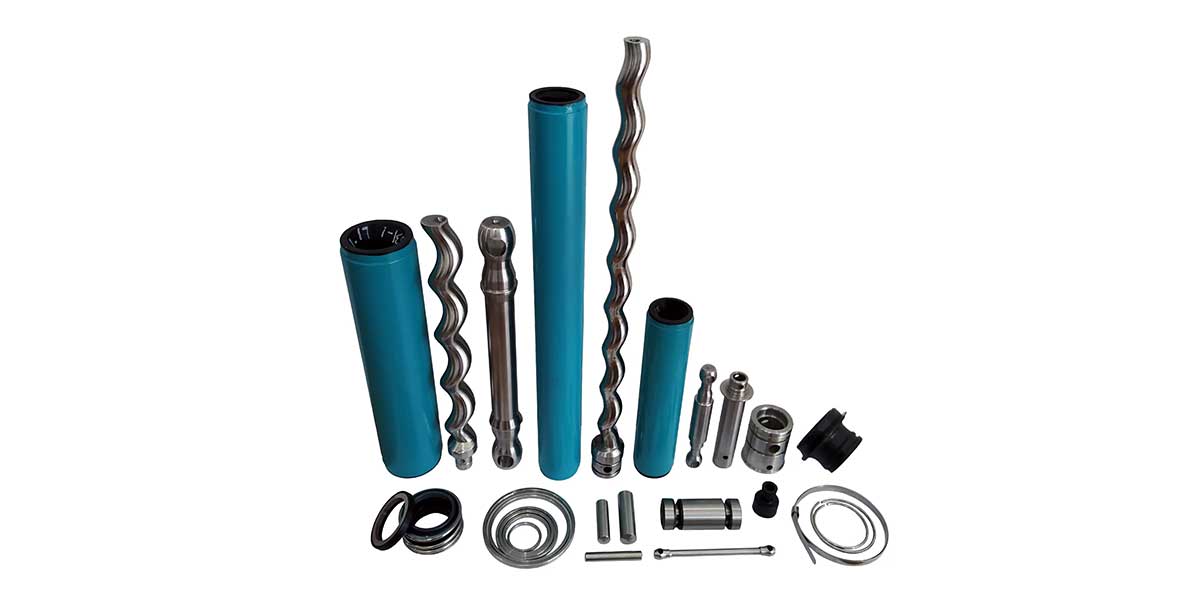 The stator’s material is also essential to the pump’s performance and longevity. Stator materials should have high wear resistance, corrosion resistance, and mechanical strength. Common materials used for stator construction include rubber, elastomers, and various polymers.
The stator’s design also affects the pump’s performance. For example, some screw pumps have stators with an elongated profile, while others have a shorter profile. Longer profiles tend to generate higher pressures, while shorter profiles tend to generate higher flow rates.
Another critical factor that affects the pump’s performance is the stator’s surface finish. The surface finish should be smooth to minimize friction between the stator and rotor, which can lead to wear and reduced performance.
The stator’s size also affects the pump’s performance. Generally, larger stators generate higher pressures, while smaller stators generate higher flow rates. However, the stator size should be optimized to balance performance and efficiency.
Proper maintenance and care of the stator can ensure optimal pump performance and longevity. Regular cleaning, inspection, and replacement of worn or damaged stators can help extend the pump’s lifespan and prevent downtime.
In conclusion, screw pump stator is a critical component of a screw pump. Its geometry, material, design, surface finish, and size all affect the pump’s performance and longevity. Proper maintenance and care of the stator can ensure optimal pump performance and prevent downtime.
The stator’s material is also essential to the pump’s performance and longevity. Stator materials should have high wear resistance, corrosion resistance, and mechanical strength. Common materials used for stator construction include rubber, elastomers, and various polymers.
The stator’s design also affects the pump’s performance. For example, some screw pumps have stators with an elongated profile, while others have a shorter profile. Longer profiles tend to generate higher pressures, while shorter profiles tend to generate higher flow rates.
Another critical factor that affects the pump’s performance is the stator’s surface finish. The surface finish should be smooth to minimize friction between the stator and rotor, which can lead to wear and reduced performance.
The stator’s size also affects the pump’s performance. Generally, larger stators generate higher pressures, while smaller stators generate higher flow rates. However, the stator size should be optimized to balance performance and efficiency.
Proper maintenance and care of the stator can ensure optimal pump performance and longevity. Regular cleaning, inspection, and replacement of worn or damaged stators can help extend the pump’s lifespan and prevent downtime.
In conclusion, screw pump stator is a critical component of a screw pump. Its geometry, material, design, surface finish, and size all affect the pump’s performance and longevity. Proper maintenance and care of the stator can ensure optimal pump performance and prevent downtime.
The stator’s material is also essential to the pump’s performance and longevity. Stator materials should have high wear resistance, corrosion resistance, and mechanical strength. Common materials used for stator construction include rubber, elastomers, and various polymers.
The stator’s design also affects the pump’s performance. For example, some screw pumps have stators with an elongated profile, while others have a shorter profile. Longer profiles tend to generate higher pressures, while shorter profiles tend to generate higher flow rates.
Another critical factor that affects the pump’s performance is the stator’s surface finish. The surface finish should be smooth to minimize friction between the stator and rotor, which can lead to wear and reduced performance.
The stator’s size also affects the pump’s performance. Generally, larger stators generate higher pressures, while smaller stators generate higher flow rates. However, the stator size should be optimized to balance performance and efficiency.
Proper maintenance and care of the stator can ensure optimal pump performance and longevity. Regular cleaning, inspection, and replacement of worn or damaged stators can help extend the pump’s lifespan and prevent downtime.
In conclusion, screw pump stator is a critical component of a screw pump. Its geometry, material, design, surface finish, and size all affect the pump’s performance and longevity. Proper maintenance and care of the stator can ensure optimal pump performance and prevent downtime.
Screw Pump Rotors: A Comprehensive Overview
Screw pump rotors are the heart of screw pumps, and they play a crucial role in ensuring the smooth and efficient operation of these pumps. In this article, we will provide a comprehensive overview of screw pump rotors, including their types, features, and applications.To get more news about screw pump stator, you can visit hw-screwpump.com official website.
Types of Screw Pump Rotors
Screw pump rotors can be broadly categorized into two types: single-screw rotors and twin-screw rotors.
Single-screw rotors consist of a single helical screw that rotates inside a stator. These rotors are commonly used in applications where high pressure and low flow rates are required, such as in oilfield production and drilling, as well as in the food and beverage industry.
Twin-screw rotors consist of two intermeshing helical screws that rotate inside a stator. These rotors are commonly used in applications where higher flow rates and lower pressures are required, such as in the chemical and pharmaceutical industries.
Screw pump rotors are an essential component of screw pumps, and they offer several features that make them stand out from other pump types. They are efficient, produce low shear, are self-priming, and can handle high viscosity fluids, making them suitable for a wide range of applications. With their use in various industries such as oil and gas, chemical and pharmaceutical, food and beverage, and wastewater treatment, screw pump rotors play a crucial role in many industrial processes.
Types of Screw Pump Rotors
Screw pump rotors can be broadly categorized into two types: single-screw rotors and twin-screw rotors.
Single-screw rotors consist of a single helical screw that rotates inside a stator. These rotors are commonly used in applications where high pressure and low flow rates are required, such as in oilfield production and drilling, as well as in the food and beverage industry.
Twin-screw rotors consist of two intermeshing helical screws that rotate inside a stator. These rotors are commonly used in applications where higher flow rates and lower pressures are required, such as in the chemical and pharmaceutical industries.
Screw pump rotors are an essential component of screw pumps, and they offer several features that make them stand out from other pump types. They are efficient, produce low shear, are self-priming, and can handle high viscosity fluids, making them suitable for a wide range of applications. With their use in various industries such as oil and gas, chemical and pharmaceutical, food and beverage, and wastewater treatment, screw pump rotors play a crucial role in many industrial processes.
Top 5 Strongest Metals in the World
One of the less well-known metals on the list, osmium is a bluish white colour, extremely tough and has a melting point of 3030 degrees celsius. Also, it’s one of the densest naturally occurring metals. Thanks to its supreme strength, osmium is commonly used in fountain pen nib tipping and electrical circuit components.To get more news about what is the strongest metal, you can visit runsom.com official website.
Steel
Steel is certainly the most common metal on the list, and has been used by humans for centuries; roughly 1.3 billion tonnes of steel is produced every year! It holds up our buildings, forms the shells of our vehicles, and is arguably one of the most useful and ubiquitous materials of the modern world. It is an alloy of iron and carbon, and often comes in the form of stainless steel, which is partly constituted by chromium.
 Chromium
, arguably the strongest metal of the five, is a distinctive silvery colour and, as stated earlier, is commonly alloyed with steel to create stainless steel. It has a variety of uses, for example, chrome plating, pigment production and even tanning.
Titanium
Titanium, unlike osmium, has a very low density but a high strength. Consequently, titanium is noted for having the highest tensile strength-to-density ratio of any metallic element on the periodic table. Titanium is often alloyed with iron and aluminium, creating extremely light alloys which are invaluable across a number of applications such as aerospace and military engineering.
Tungsten
A particularly rare metal, tungsten is a silvery grey colour and is often alloyed with steel, greatly increasing its toughness. However, alone, tungsten has the highest melting point and also the highest tensile strength of any pure metal on the periodic table, making it a top contender for the strongest metal on the planet.
Chromium
Chromium, arguably the strongest metal of the five, is a distinctive silvery colour and, as stated earlier, is commonly alloyed with steel to create stainless steel. It has a variety of uses, for example, chrome plating, pigment production and even tanning.
Titanium
Titanium, unlike osmium, has a very low density but a high strength. Consequently, titanium is noted for having the highest tensile strength-to-density ratio of any metallic element on the periodic table. Titanium is often alloyed with iron and aluminium, creating extremely light alloys which are invaluable across a number of applications such as aerospace and military engineering.
Tungsten
A particularly rare metal, tungsten is a silvery grey colour and is often alloyed with steel, greatly increasing its toughness. However, alone, tungsten has the highest melting point and also the highest tensile strength of any pure metal on the periodic table, making it a top contender for the strongest metal on the planet.
Chromium
Chromium, arguably the strongest metal of the five, is a distinctive silvery colour and, as stated earlier, is commonly alloyed with steel to create stainless steel. It has a variety of uses, for example, chrome plating, pigment production and even tanning.
Titanium
Titanium, unlike osmium, has a very low density but a high strength. Consequently, titanium is noted for having the highest tensile strength-to-density ratio of any metallic element on the periodic table. Titanium is often alloyed with iron and aluminium, creating extremely light alloys which are invaluable across a number of applications such as aerospace and military engineering.
Tungsten
A particularly rare metal, tungsten is a silvery grey colour and is often alloyed with steel, greatly increasing its toughness. However, alone, tungsten has the highest melting point and also the highest tensile strength of any pure metal on the periodic table, making it a top contender for the strongest metal on the planet.
Difference Between a Fillet and Chamfer
One of the biggest challenges faced by the mechanical engineers of all time is to Design and Develop a product with all safety and easy to handle. In order to face these challenges, engineers will take the advantage of both Fillets and Chamfers according to the design constraints. These fillets and chamfers will protect the product from the excessive stress flow lines which results in high-stress concentration areas.To get more news about difference between fillet and chamfer, you can visit runsom.com official website.
While designing and manufacturing a product, knowing the difference between the fillet and chamfer will ease the engineer to use the most appropriate followed by the design constraints. While in operation, the failure of the product due to the high-stress concentration areas will depend on the selection of the fillet or chamfer. This article will explain all the details regarding the fillet, chamfer and the difference between them with the following titles.
What is a Filleting?
A Fillet is the trimming of a sharp edge or corner deliberately during the manufacturing of a product. It can be done by two mechanisms: concave and convex fillets. The fillets on the interior surfaces are known to be as concave fillets and on the exterior surfaces are known to be as convex fillets. The predominant reason to use fillet in the manufacturing of a product is, that the fillet will reduce the stress concentration levels by distributing them uniformly on a greater surface and it will prevent the product from the expeditious deformation. The engineers and machinists will use the fillet as an alternative, to terminate the sharp edges and to have a low-stress concentration, followed by the design constraints.
The meaning of Chamfer
The Chamfer is the conversion of a product’s sharp edges or corners into angled (45° or 60°) edges or corners. The functionality of the chamfer is exactly opposite to the fillet i.e., The chamfer will have straight edges, and higher stress concentration zones and it cannot distribute the stress over a greater surface like fillets. The chamfers are generally made at 45° or 60° to the horizontal and can also be applied to both interior and exterior surfaces. The chamfer will protect the edges of a product from damage and makes the non-uniform edges into the uniform edges.
When do you use a Fillet or Chamfer?
As the fillet and chamfer are acting as an antonym to each other, the machinist and engineers will experience a problem in specifying the right one followed by the design constraints and the safety of the user. Replacing the fillet with chamfer or chamfer with fillet, will increase the manufacturing costs, reduces the efficiency of the product and the product will not last long in service. Hence, it is necessary to know, which one is right according to the design constraints and the safety of the user.
i. For the edges of a product: the chamfer will not be the suitable option for all the time. While handling the products, the sharp edges may cause injury. Hence, choose the fillet in this scenario.
ii. For outside edges of a product: According to the design requirements, both the fillets and chamfers can be used. If the design constraints are not dominant for exterior edges, one can choose the chamfer to break the sharp edges, by which the risk of injury can be reduced in service. If the exterior edges of the product are aesthetically predominant, one can use a fillet by the required radii. As the radius of the fillet increases, it will help to relieve the stresses and can make the design superior.
iii. For the hole: If the product consists of a hole, where screws or bolts will be steered, using a chamfer will be a valid decision. The sharp edge of a chamfer will promote the bland movement of the bolt/screw into the hole by which the fastening will be effortless.
A Fillet is the trimming of a sharp edge or corner deliberately during the manufacturing of a product. It can be done by two mechanisms: concave and convex fillets. The fillets on the interior surfaces are known to be as concave fillets and on the exterior surfaces are known to be as convex fillets. The predominant reason to use fillet in the manufacturing of a product is, that the fillet will reduce the stress concentration levels by distributing them uniformly on a greater surface and it will prevent the product from the expeditious deformation. The engineers and machinists will use the fillet as an alternative, to terminate the sharp edges and to have a low-stress concentration, followed by the design constraints.
The meaning of Chamfer
The Chamfer is the conversion of a product’s sharp edges or corners into angled (45° or 60°) edges or corners. The functionality of the chamfer is exactly opposite to the fillet i.e., The chamfer will have straight edges, and higher stress concentration zones and it cannot distribute the stress over a greater surface like fillets. The chamfers are generally made at 45° or 60° to the horizontal and can also be applied to both interior and exterior surfaces. The chamfer will protect the edges of a product from damage and makes the non-uniform edges into the uniform edges.
When do you use a Fillet or Chamfer?
As the fillet and chamfer are acting as an antonym to each other, the machinist and engineers will experience a problem in specifying the right one followed by the design constraints and the safety of the user. Replacing the fillet with chamfer or chamfer with fillet, will increase the manufacturing costs, reduces the efficiency of the product and the product will not last long in service. Hence, it is necessary to know, which one is right according to the design constraints and the safety of the user.
i. For the edges of a product: the chamfer will not be the suitable option for all the time. While handling the products, the sharp edges may cause injury. Hence, choose the fillet in this scenario.
ii. For outside edges of a product: According to the design requirements, both the fillets and chamfers can be used. If the design constraints are not dominant for exterior edges, one can choose the chamfer to break the sharp edges, by which the risk of injury can be reduced in service. If the exterior edges of the product are aesthetically predominant, one can use a fillet by the required radii. As the radius of the fillet increases, it will help to relieve the stresses and can make the design superior.
iii. For the hole: If the product consists of a hole, where screws or bolts will be steered, using a chamfer will be a valid decision. The sharp edge of a chamfer will promote the bland movement of the bolt/screw into the hole by which the fastening will be effortless.
How to get better at reading Chinese language news
Reading the news in Chinese regularly is the best way to keep up with what’s going on in China, maintain and improve your Chinese language skills, and stay on top of the latest language trends.To get more news about chinese alphabet for beginners, you can visit shine news official website.
But it’s also a painful and sometimes almost impossible task to get through a Chinese news article, even for the most advanced language learner.
‘News Reader’ text books teach you ‘newsy’ language, but they don’t teach or prepare the non-native reader for “how” to read the news in Chinese.
That’s because it’s an art which you can only learn through long, lonely hours of wading through dull and frustratingly difficult news articles. I’ve been publishing the Slow Chinese 每周漫文 newsletter every week for nearly two years (86 weeks, but who's counting!), reading five to ten long-form Chinese news and opinion pieces each week.
Before starting to write Slow Chinese, I would hardly ever get through a whole Chinese news piece - giving up because it was too hard, boring, depressing, and/or confusing.
But through the process of reading and writing each week, I’ve developed a framework which makes it much easier to select, read and understand any Chinese language news article.The Methven Method is a framework which helps me improve my news reading skills and ability to choose and consume any news article more quickly and efficiently.
And I’m sure it can help you if you are an advanced learner of Mandarin who needs to read the news in Chinese.The course is led by me, Andrew Methven, with the help of Zoe Qian, who edits the Slow Chinese newsletter
As a native speaker, Zoe will share her takes, tips and tactics with students.
She will be presenting the second module on the Chinese language media landscape - a must for anyone who has to, or aspires to, read the news in Chinese as part of their job. Finally, if this course isn’t for you, but you want to support and help get it in front of the right people, please help share on your social channels and with your Chinese language learning networks.
TIPS AND TRICKS FROM OUR CAD ROOM
Our CAD team is driven to create every piece of jewelry exactly how you’ve imagined it. With this desire for perfection comes a need for organization. From keeping all information on one email chain to ensuring sample pictures capture every detail, this is a short list of the tips and tricks to help us help you!To get more news about Gstarsoft Tips & Tricks, you can visit shine news official website.
1. There is no such thing as too much information! Include as much as possible ie. stone count, stone sizes, finger sizes, metal type, store name, store address. Sample pictures are always welcomed! Google images is a great place to find the piece you can’t seem to describe in words. If you have a job# internally, please include it as well.When receiving an estimate or question via email, please reply to the email. Please don’t call or draft a new email, keep all communication in one thread.
 2. When receiving an estimate or question via email, please reply to the email. Please don’t call or draft a new email, keep all communication in one thread.
3. When taking a picture of a piece of jewelry to be copied, make sure we get all of the details that will be needed. The clearer the picture, the more accurate we can be. For a ring, we need at least a top and a through finger view (preferably not on a finger).
4. When returning a job to proceed an estimate, have additional work done, or have an issue corrected, please include all info, job bag, label, and paperwork from the original job. This will eliminate confusion and ensure that we know everything that has taken place with the job thus far.
5. Write out instructions all the way, do not use shorthand or assume certain tasks will be done. If proceeding an estimate, but also changing the instructions or size, write “proceed estimate and add sizing” on the job.
6. If sending stones or metal to accompany a job, make sure the job# is referenced properly so the material can be paired with its job quickly and avoid delays.
2. When receiving an estimate or question via email, please reply to the email. Please don’t call or draft a new email, keep all communication in one thread.
3. When taking a picture of a piece of jewelry to be copied, make sure we get all of the details that will be needed. The clearer the picture, the more accurate we can be. For a ring, we need at least a top and a through finger view (preferably not on a finger).
4. When returning a job to proceed an estimate, have additional work done, or have an issue corrected, please include all info, job bag, label, and paperwork from the original job. This will eliminate confusion and ensure that we know everything that has taken place with the job thus far.
5. Write out instructions all the way, do not use shorthand or assume certain tasks will be done. If proceeding an estimate, but also changing the instructions or size, write “proceed estimate and add sizing” on the job.
6. If sending stones or metal to accompany a job, make sure the job# is referenced properly so the material can be paired with its job quickly and avoid delays.
2. When receiving an estimate or question via email, please reply to the email. Please don’t call or draft a new email, keep all communication in one thread.
3. When taking a picture of a piece of jewelry to be copied, make sure we get all of the details that will be needed. The clearer the picture, the more accurate we can be. For a ring, we need at least a top and a through finger view (preferably not on a finger).
4. When returning a job to proceed an estimate, have additional work done, or have an issue corrected, please include all info, job bag, label, and paperwork from the original job. This will eliminate confusion and ensure that we know everything that has taken place with the job thus far.
5. Write out instructions all the way, do not use shorthand or assume certain tasks will be done. If proceeding an estimate, but also changing the instructions or size, write “proceed estimate and add sizing” on the job.
6. If sending stones or metal to accompany a job, make sure the job# is referenced properly so the material can be paired with its job quickly and avoid delays.
How Can A Newbie Start Learning About Blockchain?
Blockchain indeed is one of the most revolutionary changes that has emerged in the recent past. Some believe that it is going to be a key driver of change for many industries. This has opened the gateway to opportunities for many businesses to start developing Blockchain-based applications, and at the same time, it also paves the way for new job opportunities. Knowing Blockchain technology and its application in various domains will keep you ahead of the crowd. It will positively affect your resume and fetch you a better job and a handsome salary.To get more news about learn blockchain, you can visit wikifx.com official website.
The next question is how a beginner should begin learning about this technology. Although you may find many companies promoting these courses, finding the one which can provide you with hands-on experience in addition to theoretical practice is a daunting task. Blockchain Council is a renowned platform for learning. It offers courses for both beginners and professionals. Learn Blockchain concepts and have an in-depth knowledge of Blockchain technology and its platforms. Now, How to learn Blockchain technology? This article will guide you through the path of becoming a Blockchain professional.
 Definition of Blockchain
A Blockchain is a decentralized, distributed digital ledger that records transactions in a secure and transparent manner. It consists of a network of computers, known as nodes, that work together to validate and record transactions on the Blockchain. Each node has a copy of the ledger, and any changes made to the ledger are verified and recorded across all nodes in the network. A Blockchain can store any type of information, not just financial transactions.
How it works?
Here is a step-by-step explanation of how a Blockchain transaction works:
Step 1: Initiation of a Transaction
A transaction is initiated when one user wants to send digital assets or cryptocurrencies to another user. This transaction includes the details of the sender, the recipient, the amount, and any other relevant information.
Step 2: Verification of the Transaction
Once the transaction is initiated, it is broadcast to the nodes on the Blockchain network. Each node verifies the transaction by checking whether the sender has sufficient funds to complete the transaction and whether the transaction meets the necessary criteria.
Step 3: Validation of the Transaction
Once the transaction is verified, it is validated by the nodes on the network. This validation process involves solving a complex mathematical problem, known as proof of work, or proof of stake, depending on the Blockchain technology being used. This process ensures that the transaction is legitimate and that the sender has the authority to make the transfer.
Step 4: Recording of the Transaction
Once the transaction is validated, it is recorded on the Blockchain. The transaction is added to a block, which is then added to a chain of blocks in a chronological order, forming an unalterable and transparent record of all transactions on the Blockchain.
Step 5: Confirmation of the Transaction
After the transaction is recorded, it needs to be confirmed by the nodes on the Blockchain network. This confirmation process involves checking the authenticity and accuracy of the transaction details and ensuring that it complies with the rules and regulations of the Blockchain network.
Step 6: Distribution of the Transaction
Once the transaction is confirmed, it is distributed across the entire network of nodes, which adds it to their copy of the ledger. This ensures that all nodes have an up-to-date and accurate copy of the ledger.
Step 7: Completion of the Transaction
Finally, the transaction is completed, and the digital assets or cryptocurrencies are transferred from the sender to the recipient. This transaction is now recorded on the Blockchain, forming an immutable and transparent record that can be verified by anyone on the network.
Definition of Blockchain
A Blockchain is a decentralized, distributed digital ledger that records transactions in a secure and transparent manner. It consists of a network of computers, known as nodes, that work together to validate and record transactions on the Blockchain. Each node has a copy of the ledger, and any changes made to the ledger are verified and recorded across all nodes in the network. A Blockchain can store any type of information, not just financial transactions.
How it works?
Here is a step-by-step explanation of how a Blockchain transaction works:
Step 1: Initiation of a Transaction
A transaction is initiated when one user wants to send digital assets or cryptocurrencies to another user. This transaction includes the details of the sender, the recipient, the amount, and any other relevant information.
Step 2: Verification of the Transaction
Once the transaction is initiated, it is broadcast to the nodes on the Blockchain network. Each node verifies the transaction by checking whether the sender has sufficient funds to complete the transaction and whether the transaction meets the necessary criteria.
Step 3: Validation of the Transaction
Once the transaction is verified, it is validated by the nodes on the network. This validation process involves solving a complex mathematical problem, known as proof of work, or proof of stake, depending on the Blockchain technology being used. This process ensures that the transaction is legitimate and that the sender has the authority to make the transfer.
Step 4: Recording of the Transaction
Once the transaction is validated, it is recorded on the Blockchain. The transaction is added to a block, which is then added to a chain of blocks in a chronological order, forming an unalterable and transparent record of all transactions on the Blockchain.
Step 5: Confirmation of the Transaction
After the transaction is recorded, it needs to be confirmed by the nodes on the Blockchain network. This confirmation process involves checking the authenticity and accuracy of the transaction details and ensuring that it complies with the rules and regulations of the Blockchain network.
Step 6: Distribution of the Transaction
Once the transaction is confirmed, it is distributed across the entire network of nodes, which adds it to their copy of the ledger. This ensures that all nodes have an up-to-date and accurate copy of the ledger.
Step 7: Completion of the Transaction
Finally, the transaction is completed, and the digital assets or cryptocurrencies are transferred from the sender to the recipient. This transaction is now recorded on the Blockchain, forming an immutable and transparent record that can be verified by anyone on the network.
Definition of Blockchain
A Blockchain is a decentralized, distributed digital ledger that records transactions in a secure and transparent manner. It consists of a network of computers, known as nodes, that work together to validate and record transactions on the Blockchain. Each node has a copy of the ledger, and any changes made to the ledger are verified and recorded across all nodes in the network. A Blockchain can store any type of information, not just financial transactions.
How it works?
Here is a step-by-step explanation of how a Blockchain transaction works:
Step 1: Initiation of a Transaction
A transaction is initiated when one user wants to send digital assets or cryptocurrencies to another user. This transaction includes the details of the sender, the recipient, the amount, and any other relevant information.
Step 2: Verification of the Transaction
Once the transaction is initiated, it is broadcast to the nodes on the Blockchain network. Each node verifies the transaction by checking whether the sender has sufficient funds to complete the transaction and whether the transaction meets the necessary criteria.
Step 3: Validation of the Transaction
Once the transaction is verified, it is validated by the nodes on the network. This validation process involves solving a complex mathematical problem, known as proof of work, or proof of stake, depending on the Blockchain technology being used. This process ensures that the transaction is legitimate and that the sender has the authority to make the transfer.
Step 4: Recording of the Transaction
Once the transaction is validated, it is recorded on the Blockchain. The transaction is added to a block, which is then added to a chain of blocks in a chronological order, forming an unalterable and transparent record of all transactions on the Blockchain.
Step 5: Confirmation of the Transaction
After the transaction is recorded, it needs to be confirmed by the nodes on the Blockchain network. This confirmation process involves checking the authenticity and accuracy of the transaction details and ensuring that it complies with the rules and regulations of the Blockchain network.
Step 6: Distribution of the Transaction
Once the transaction is confirmed, it is distributed across the entire network of nodes, which adds it to their copy of the ledger. This ensures that all nodes have an up-to-date and accurate copy of the ledger.
Step 7: Completion of the Transaction
Finally, the transaction is completed, and the digital assets or cryptocurrencies are transferred from the sender to the recipient. This transaction is now recorded on the Blockchain, forming an immutable and transparent record that can be verified by anyone on the network.
Every Crypto Project Must Reckon With the SEC's Howey Test
Nearly five years ago, SEC official Bill Himan stood on stage at a Yahoo Finance crypto summit in San Francisco and delivered a prepared speech that concluded that Ethereum (ETH) is not a security. A footnote on the SEC's website clarified that the speech "expresses the author’s views and does not necessarily reflect those of the Commission," but it was nonetheless taken exactly that way.To get more news about crypto projects, you can visit wikifx.com official website.
Hinman's speech came just one week after then-SEC chair Jay Clayton said that the SEC does not view Bitcoin or other cryptocurrencies as securities, as opposed to tokens, Clayton said, "where I give you my money, and you go off and make a venture, and in return for giving you my money I say 'you can get a return'—that is a security."
 But Gary Gensler, the current SEC chair and scourge of crypto builders, has made clear that he does not share Hinman's view. He views "everything other than Bitcoin" as a security. Last fall, just one day after Ethereum completed its merge to become a proof-of-stake network, Gensler said that the native tokens of networks that use staking also look like securities, since "the investing public is anticipating profits based on the efforts of others."
And Gensler is using as his north star the same test that Hinman and Clayton used: a 77-year-old lawsuit involving a Florida citrus grove.
The "Howey Test" has become an infamous bogeyman for everyone in crypto, and while the industry would like it to go away, it is clear that isn't going to happen any time soon.
Hinman and Clayton are both long gone from the SEC and have moved on to advise crypto firms (naturally). But Howey remains, and Gensler has cited it to make the case that all of crypto falls under SEC jurisdiction—even though just last month, his counterpart at the CFTC said ETH is a commodity.
(Ironically, Hinman's speech in June 2018 was called "When Gary Met Howey," but he was referencing a 1985 case involving Gary Plastic Packaging that showed a non-security can become a security depending on how it's marketed; Hinman couldn't know that in a few years, a different Gary would wield Howey as a hammer against an entire trillion-dollar industry.)
The thrust of Howey is that an asset becomes an investment contract when it is marketed or sold with the expectation of profit thanks to the work of the seller or a third party. The citrus grove itself was not a security, but shares in the citrus grove were. Hinman argued that putting aside the initial Ethereum fundraise in 2014 that brought in $18 million, the network had since become sufficiently decentralized to rule out current sales of ETH as securities offerings. Gensler does not appear to agree, but more importantly—and more damaging for most new crypto projects—is that all other token sales built on Ethereum do look pretty clearly like securities under the Howey definition. Speculators buy them in the hopes that the token will go up based on the perceived success of the project.
But wait! What if the token is genuinely used in the project's ecosystem, and has real utility beyond price speculation? Doesn't matter, as Hinman said in 2018 way before Gensler showed up: "Simply labeling a digital asset a 'utility token' does not turn the asset into something that is not a security." In other words: call your token whatever you want, the SEC still thinks it's a security.
People in crypto like to say that the SEC has not given "clear guidelines" for crypto projects, but the truth is that it has. Its guiding light is the Howey Test—the industry just doesn't like it. Gensler said in front of Congress just last week: No new rules are coming, because "the regulations actually already exist."
Another problem people raise with Howey is that it's too damn old to be applied fairly anymore, but even Coinbase Chief Legal Officer Paul Grewal, a former California magistrate judge, said recently on our gm podcast that the issue with Howey is not its age: "I love legal precedents, even if they are decades old. So I have no problem with Howey or any other precedent simply because of its age."
The problem with Howey is how it's being applied to new technology.
"When it comes to the operation of a blockchain-based technology that underlies most digital assets, there is often, I think, a confusion about the role of the promoter, a confusion about what is driving any returns that might accrue to the holder of tokens, and a confusion about fundamentally how these assets work, and what real utility they bring to the networks,," Grewal said. "When it comes to networks that are based on a proof-of-stake consensus mechanism, there's a very important role that these tokens play, which is to make sure that the networks are secure, that the transactions that are confirmed on the network are accurate.
But Gary Gensler, the current SEC chair and scourge of crypto builders, has made clear that he does not share Hinman's view. He views "everything other than Bitcoin" as a security. Last fall, just one day after Ethereum completed its merge to become a proof-of-stake network, Gensler said that the native tokens of networks that use staking also look like securities, since "the investing public is anticipating profits based on the efforts of others."
And Gensler is using as his north star the same test that Hinman and Clayton used: a 77-year-old lawsuit involving a Florida citrus grove.
The "Howey Test" has become an infamous bogeyman for everyone in crypto, and while the industry would like it to go away, it is clear that isn't going to happen any time soon.
Hinman and Clayton are both long gone from the SEC and have moved on to advise crypto firms (naturally). But Howey remains, and Gensler has cited it to make the case that all of crypto falls under SEC jurisdiction—even though just last month, his counterpart at the CFTC said ETH is a commodity.
(Ironically, Hinman's speech in June 2018 was called "When Gary Met Howey," but he was referencing a 1985 case involving Gary Plastic Packaging that showed a non-security can become a security depending on how it's marketed; Hinman couldn't know that in a few years, a different Gary would wield Howey as a hammer against an entire trillion-dollar industry.)
The thrust of Howey is that an asset becomes an investment contract when it is marketed or sold with the expectation of profit thanks to the work of the seller or a third party. The citrus grove itself was not a security, but shares in the citrus grove were. Hinman argued that putting aside the initial Ethereum fundraise in 2014 that brought in $18 million, the network had since become sufficiently decentralized to rule out current sales of ETH as securities offerings. Gensler does not appear to agree, but more importantly—and more damaging for most new crypto projects—is that all other token sales built on Ethereum do look pretty clearly like securities under the Howey definition. Speculators buy them in the hopes that the token will go up based on the perceived success of the project.
But wait! What if the token is genuinely used in the project's ecosystem, and has real utility beyond price speculation? Doesn't matter, as Hinman said in 2018 way before Gensler showed up: "Simply labeling a digital asset a 'utility token' does not turn the asset into something that is not a security." In other words: call your token whatever you want, the SEC still thinks it's a security.
People in crypto like to say that the SEC has not given "clear guidelines" for crypto projects, but the truth is that it has. Its guiding light is the Howey Test—the industry just doesn't like it. Gensler said in front of Congress just last week: No new rules are coming, because "the regulations actually already exist."
Another problem people raise with Howey is that it's too damn old to be applied fairly anymore, but even Coinbase Chief Legal Officer Paul Grewal, a former California magistrate judge, said recently on our gm podcast that the issue with Howey is not its age: "I love legal precedents, even if they are decades old. So I have no problem with Howey or any other precedent simply because of its age."
The problem with Howey is how it's being applied to new technology.
"When it comes to the operation of a blockchain-based technology that underlies most digital assets, there is often, I think, a confusion about the role of the promoter, a confusion about what is driving any returns that might accrue to the holder of tokens, and a confusion about fundamentally how these assets work, and what real utility they bring to the networks,," Grewal said. "When it comes to networks that are based on a proof-of-stake consensus mechanism, there's a very important role that these tokens play, which is to make sure that the networks are secure, that the transactions that are confirmed on the network are accurate.
But Gary Gensler, the current SEC chair and scourge of crypto builders, has made clear that he does not share Hinman's view. He views "everything other than Bitcoin" as a security. Last fall, just one day after Ethereum completed its merge to become a proof-of-stake network, Gensler said that the native tokens of networks that use staking also look like securities, since "the investing public is anticipating profits based on the efforts of others."
And Gensler is using as his north star the same test that Hinman and Clayton used: a 77-year-old lawsuit involving a Florida citrus grove.
The "Howey Test" has become an infamous bogeyman for everyone in crypto, and while the industry would like it to go away, it is clear that isn't going to happen any time soon.
Hinman and Clayton are both long gone from the SEC and have moved on to advise crypto firms (naturally). But Howey remains, and Gensler has cited it to make the case that all of crypto falls under SEC jurisdiction—even though just last month, his counterpart at the CFTC said ETH is a commodity.
(Ironically, Hinman's speech in June 2018 was called "When Gary Met Howey," but he was referencing a 1985 case involving Gary Plastic Packaging that showed a non-security can become a security depending on how it's marketed; Hinman couldn't know that in a few years, a different Gary would wield Howey as a hammer against an entire trillion-dollar industry.)
The thrust of Howey is that an asset becomes an investment contract when it is marketed or sold with the expectation of profit thanks to the work of the seller or a third party. The citrus grove itself was not a security, but shares in the citrus grove were. Hinman argued that putting aside the initial Ethereum fundraise in 2014 that brought in $18 million, the network had since become sufficiently decentralized to rule out current sales of ETH as securities offerings. Gensler does not appear to agree, but more importantly—and more damaging for most new crypto projects—is that all other token sales built on Ethereum do look pretty clearly like securities under the Howey definition. Speculators buy them in the hopes that the token will go up based on the perceived success of the project.
But wait! What if the token is genuinely used in the project's ecosystem, and has real utility beyond price speculation? Doesn't matter, as Hinman said in 2018 way before Gensler showed up: "Simply labeling a digital asset a 'utility token' does not turn the asset into something that is not a security." In other words: call your token whatever you want, the SEC still thinks it's a security.
People in crypto like to say that the SEC has not given "clear guidelines" for crypto projects, but the truth is that it has. Its guiding light is the Howey Test—the industry just doesn't like it. Gensler said in front of Congress just last week: No new rules are coming, because "the regulations actually already exist."
Another problem people raise with Howey is that it's too damn old to be applied fairly anymore, but even Coinbase Chief Legal Officer Paul Grewal, a former California magistrate judge, said recently on our gm podcast that the issue with Howey is not its age: "I love legal precedents, even if they are decades old. So I have no problem with Howey or any other precedent simply because of its age."
The problem with Howey is how it's being applied to new technology.
"When it comes to the operation of a blockchain-based technology that underlies most digital assets, there is often, I think, a confusion about the role of the promoter, a confusion about what is driving any returns that might accrue to the holder of tokens, and a confusion about fundamentally how these assets work, and what real utility they bring to the networks,," Grewal said. "When it comes to networks that are based on a proof-of-stake consensus mechanism, there's a very important role that these tokens play, which is to make sure that the networks are secure, that the transactions that are confirmed on the network are accurate.
Crypto Year Ender: Here’s A Look At Major Crypto Scams Of 2022
Delhi Police recently unearthed a cryptocurrency scam estimated at Rs 500 crore. The police are reportedly on the lookout for a group of cybercriminals accused of defrauding scores of people by promising them 200 per cent return on their investments. To get more news about crypto exchange scams, you can visit wikifx.com official website.
But this was not the first crypto scam of 2022. Here we have listed some of the major scams that rocked the crypto world in 2022.
 A recent research by www.privacyaffairs.com claims that hackers stole cryptocurrency worth $4.3 billion between January and November 2022. This represents a growth of 37 per cent compared to 2021. That said, the number of individual transfers to cryptocurrency fraud over the previous four years have declined.
Some two million people fell prey to 200,000 crypto scams globally between September 2020 and December 1, 2022, reveals a report by New York-based crypto trade surveillance firm Solidus Labs.
The report, titled “The Rug Pull Report 2022”, notes that “rug pulls are one of the most common scams in crypto.” But until recently, regulators had no access to either forensic or compliance tools that could identify and address the threat.
Here are the major crypto frauds of 2022 in a nutshell.
Ronin Network — $625 million stolen
In March 2022, a hacker stole user funds worth $625 million from the Ronin Network. The Ronin Network is a side chain (a subset of a larger Blockchain) used to support a Blockchain-based game called Axie Infinity. The hacker managed to steal private keys to generate fake withdrawals, transferring hundreds of millions from the network. The hack was not uncovered until a week later.
Wormhole Bridge — $325 million stolen
A hacker targeted a cross-chain bridge known as Wormhole in February 2022. The Wormhole protocol allows for the transfer of funds between multiple chains, including Ethereum (ETH). The hacker took advantage of weaknesses in the protocol’s validation system to fraudulently generate a large quantity of wrapped Ethereum (WETH), a token with a value tied to the Ethereum coin. The hacker then used the Wormhole to convert the WETH into ETH, making off with cryptocurrency valued around $325 million.
Beanstalk Farms — $182 million stolen
Beanstalk Farms is a Stablecoin protocol based on Ethereum. Stablecoins are crypto tokens that are designed to remain at a stable value, instead of fluctuating up and down. The protocol used a native governance token called STALK. If someone wanted to transfer assets out of Beanstalk Farms, they would need approval from a majority of STALK holders.
In April 2022, a hacker used a flash loan (an extremely short-term crypto loan) to buy a majority position in STALK. The hacker then proposed a massive transfer of funds and used the STALK tokens to approve the proposal. It’s estimated that the hacker profited by around $80 million, but the hack caused the Stablecoin to crash, resulting in total losses of $182 million.
Wintermute — $162 million
In September 2022, a crypto market maker called Wintermute lost $162 million in a major hack. It’s not clear yet how the attack was carried out, but security firms have suggested that essential private keys were either leaked or cracked using a brute-force attack.
Shortly after the hack, some crypto researchers claimed that the hack may have been an insider attack, but this has not been confirmed.
Says Daniel Markuson of NordVPN: “To protect yourself from a crypto hack, it is important to not only research a crypto exchange you will use, but also make sure your wallet key is secure once you have invested. For example, use encrypted storage services to keep all your sensitive data, including cryptographic keys, shielded from prying eyes. If you have an account with a crypto exchange, make sure to use multi-factor authentication and a password manager, like NordPass.
A recent research by www.privacyaffairs.com claims that hackers stole cryptocurrency worth $4.3 billion between January and November 2022. This represents a growth of 37 per cent compared to 2021. That said, the number of individual transfers to cryptocurrency fraud over the previous four years have declined.
Some two million people fell prey to 200,000 crypto scams globally between September 2020 and December 1, 2022, reveals a report by New York-based crypto trade surveillance firm Solidus Labs.
The report, titled “The Rug Pull Report 2022”, notes that “rug pulls are one of the most common scams in crypto.” But until recently, regulators had no access to either forensic or compliance tools that could identify and address the threat.
Here are the major crypto frauds of 2022 in a nutshell.
Ronin Network — $625 million stolen
In March 2022, a hacker stole user funds worth $625 million from the Ronin Network. The Ronin Network is a side chain (a subset of a larger Blockchain) used to support a Blockchain-based game called Axie Infinity. The hacker managed to steal private keys to generate fake withdrawals, transferring hundreds of millions from the network. The hack was not uncovered until a week later.
Wormhole Bridge — $325 million stolen
A hacker targeted a cross-chain bridge known as Wormhole in February 2022. The Wormhole protocol allows for the transfer of funds between multiple chains, including Ethereum (ETH). The hacker took advantage of weaknesses in the protocol’s validation system to fraudulently generate a large quantity of wrapped Ethereum (WETH), a token with a value tied to the Ethereum coin. The hacker then used the Wormhole to convert the WETH into ETH, making off with cryptocurrency valued around $325 million.
Beanstalk Farms — $182 million stolen
Beanstalk Farms is a Stablecoin protocol based on Ethereum. Stablecoins are crypto tokens that are designed to remain at a stable value, instead of fluctuating up and down. The protocol used a native governance token called STALK. If someone wanted to transfer assets out of Beanstalk Farms, they would need approval from a majority of STALK holders.
In April 2022, a hacker used a flash loan (an extremely short-term crypto loan) to buy a majority position in STALK. The hacker then proposed a massive transfer of funds and used the STALK tokens to approve the proposal. It’s estimated that the hacker profited by around $80 million, but the hack caused the Stablecoin to crash, resulting in total losses of $182 million.
Wintermute — $162 million
In September 2022, a crypto market maker called Wintermute lost $162 million in a major hack. It’s not clear yet how the attack was carried out, but security firms have suggested that essential private keys were either leaked or cracked using a brute-force attack.
Shortly after the hack, some crypto researchers claimed that the hack may have been an insider attack, but this has not been confirmed.
Says Daniel Markuson of NordVPN: “To protect yourself from a crypto hack, it is important to not only research a crypto exchange you will use, but also make sure your wallet key is secure once you have invested. For example, use encrypted storage services to keep all your sensitive data, including cryptographic keys, shielded from prying eyes. If you have an account with a crypto exchange, make sure to use multi-factor authentication and a password manager, like NordPass.
A recent research by www.privacyaffairs.com claims that hackers stole cryptocurrency worth $4.3 billion between January and November 2022. This represents a growth of 37 per cent compared to 2021. That said, the number of individual transfers to cryptocurrency fraud over the previous four years have declined.
Some two million people fell prey to 200,000 crypto scams globally between September 2020 and December 1, 2022, reveals a report by New York-based crypto trade surveillance firm Solidus Labs.
The report, titled “The Rug Pull Report 2022”, notes that “rug pulls are one of the most common scams in crypto.” But until recently, regulators had no access to either forensic or compliance tools that could identify and address the threat.
Here are the major crypto frauds of 2022 in a nutshell.
Ronin Network — $625 million stolen
In March 2022, a hacker stole user funds worth $625 million from the Ronin Network. The Ronin Network is a side chain (a subset of a larger Blockchain) used to support a Blockchain-based game called Axie Infinity. The hacker managed to steal private keys to generate fake withdrawals, transferring hundreds of millions from the network. The hack was not uncovered until a week later.
Wormhole Bridge — $325 million stolen
A hacker targeted a cross-chain bridge known as Wormhole in February 2022. The Wormhole protocol allows for the transfer of funds between multiple chains, including Ethereum (ETH). The hacker took advantage of weaknesses in the protocol’s validation system to fraudulently generate a large quantity of wrapped Ethereum (WETH), a token with a value tied to the Ethereum coin. The hacker then used the Wormhole to convert the WETH into ETH, making off with cryptocurrency valued around $325 million.
Beanstalk Farms — $182 million stolen
Beanstalk Farms is a Stablecoin protocol based on Ethereum. Stablecoins are crypto tokens that are designed to remain at a stable value, instead of fluctuating up and down. The protocol used a native governance token called STALK. If someone wanted to transfer assets out of Beanstalk Farms, they would need approval from a majority of STALK holders.
In April 2022, a hacker used a flash loan (an extremely short-term crypto loan) to buy a majority position in STALK. The hacker then proposed a massive transfer of funds and used the STALK tokens to approve the proposal. It’s estimated that the hacker profited by around $80 million, but the hack caused the Stablecoin to crash, resulting in total losses of $182 million.
Wintermute — $162 million
In September 2022, a crypto market maker called Wintermute lost $162 million in a major hack. It’s not clear yet how the attack was carried out, but security firms have suggested that essential private keys were either leaked or cracked using a brute-force attack.
Shortly after the hack, some crypto researchers claimed that the hack may have been an insider attack, but this has not been confirmed.
Says Daniel Markuson of NordVPN: “To protect yourself from a crypto hack, it is important to not only research a crypto exchange you will use, but also make sure your wallet key is secure once you have invested. For example, use encrypted storage services to keep all your sensitive data, including cryptographic keys, shielded from prying eyes. If you have an account with a crypto exchange, make sure to use multi-factor authentication and a password manager, like NordPass.
A survey on blockchain technology and its security
Blockchain is a technology that has desirable features of decentralization, autonomy, integrity, immutability, verification, fault-tolerance, anonymity, auditability, and transparency. In this paper, we first carry out a deeper survey about blockchain technology, especially its history, consensus algorithms' quantitative comparisons, details of cryptography in terms of public key cryptography, Zero-Knowledge Proofs, and hash functions used in the blockchain, and the comprehensive list of blockchain applications. Further, the security of blockchain itself is a focus in this paper. In particular, we assess the blockchain security from risk analysis to derive comprehensive blockchain security risk categories, analyze the real attacks and bugs against blockchain, and summarize the recently developed security measures on blockchain. Finally, the challenges and research trends are presented to achieve more scalable and securer blockchain systems for the massive deployments.To get more news about blockchain field survey, you can visit wikifx.com official website.
 1. Introduction
In blockchain, data are kept in a distributed ledger. It is the blockchain technology to provide integrity and availability that allows participants in the blockchain network to write, read, and verify transactions recorded in a distributed ledger. However, it does not allow the deletion and modification operations on the transactions and other information stored on its ledger. The blockchain system is supported and secured by cryptographic primitives and protocols, e.g., digital signatures, hash functions, etc. These primitives guarantee the transactions that are recorded into the ledger are integrity-protected, authenticity-verified, and non-repudiated. Further, as a distributed network, to allow the entire set of participants to agree on a unified record, the blockchain technology also needs a consensus protocol, which is essentially a set of rules to be followed by every participant, in order to achieve a globally unified view.
In a trustless environment, blockchain provides users with desirable features of decentralization, autonomy, integrity, immutability, verification, fault-tolerance, attracted great academic and industrial attention in the recent few years, anonymity, auditability, and transparency [[1], [2], [3]]. With these advanced features, blockchain technology has attracted great academic and industrial attention in the recent few years.
To help and benefit someone to understand the blockchain technology and blockchain security issues, especially for users who use blockchain to do the transactions, and for researchers who will be developing blockchain technology and addressing blockchain security issues, we put in our effort and time to conduct the comprehensive survey and analysis on blockchain technology and its security issues. First, we identify keywords, namely, blockchain, survey, consensus algorithm, smart contract, risk, and blockchain security to search publications and information on the Internet. Second, we survey papers related to blockchain published in top security conferences and journals, e.g., USENIX Security Symposium, IEEE Symposium on Security and Privacy, IEEE Transactions journals, and so on. In this way, we have surveyed as many papers as possible so as to overcome the study and result biases. Our survey paper presents the comprehensive findings from other research work.
The main contributions of our survey include: 1) We compare various consensus algorithms with detailed analysis and numerical figures and present the cryptography fundamentals of blockchain; 2) We present the rich information about the smart contract and its security; 3) We explore the widely used applications of blockchain technology, including but not limited to different cryptocurrencies; 4) We conduct a comprehensive analysis on the security risks, real attacks, bugs, root causes, and recent security measures on blockchain itself; Last but not least, 5) The challenges and research trends are summarized and presented in this paper for the further efforts to develop the blockchain technology for the massive deployments.
The rest of the paper is organized as follows: Section 2 introduces the overview. Section 3 describes the blockchain technology in detail, including consensus algorithms, smart contracts, and cryptography for blockchain, while the comprehensive blockchain applications are presented in Section 4. The security risks and real attacks on blockchain are presented in Section 5, and security measures are described in Section 6. Section 7 analyses the challenges and the research trends for blockchain. Section 8 summarizes the related survey work to show our contribution. Finally, Section 9 concludes our work.
2. Overview of blockchain history
In 1982, Chaum was the first known person to propose a blockchain-like protocol in his Ph.D. thesis [4]. In 1991, Haber and Stornetta described a secured chain of blocks cryptographically [5]. In 1993, Bayer et al. incorporated Merkle trees into the design [6]. In 1998, ‘‘bit gold’’—a decentralized digital currency mechanism was designed by Szabo [7]. In 2008, Nakamoto introduced Bitcoin, electronic cash with a purely peer-to-peer network [8]. It was also in 2008 that the term blockchain was first introduced as the distributed ledger behind Bitcoin transactions [9].
In 2013, Buterin proposed Ethereum in his whitepaper [10]. In 2014, the development of Ethereum was crowdfunded, and on July 30, 2015, the Ethereum network went live. The emerging of Ethereum implied that blockchain 2.0 was born because different from all the various blockchain projects that focused on developing altcoins (other coins which are similar to Bitcoin), Ethereum enables people to connect through trustless distributed applications on its own blockchain. In other words, while Bitcoin is developed for distributed ledger, Ethereum is developed for a distributed data storage plus smart contracts, which are small computer programs. Ethereum 2.0 upgrades the Ethereum network which aims to boost the speed, scalability, efficiency, and security of the network. The upgrades have 3 phases crossing from 2020 to 2022.
In 2015, the Linux Foundation announced the Hyperledger project, which is open-source software for blockchains. With the aim of building enterprise blockchain, Hyperledger blockchain frameworks are different from Bitcoin and Ethereum. Under Hyperledger, there are eight blockchain frameworks, including Hyperledger Besu, Hyperledger Fabric, Hyperledger Indy, Hyperledger Sawtooth, Hyperledger Burrow, Hyperledger Iroha, Hyperledger Grid, and Hyperledger Labs, five Hyperledger tools, including Hyperledger Avalon, Hyperledger Cactus, Heperledger Caliper, Hyperledger Cello, and Hyperledger Explorer, and four libraries, including Hyperledger Aries, Hyperledger Quilt, Hyperledger Transact, and Hyperledger URSA [11].
1. Introduction
In blockchain, data are kept in a distributed ledger. It is the blockchain technology to provide integrity and availability that allows participants in the blockchain network to write, read, and verify transactions recorded in a distributed ledger. However, it does not allow the deletion and modification operations on the transactions and other information stored on its ledger. The blockchain system is supported and secured by cryptographic primitives and protocols, e.g., digital signatures, hash functions, etc. These primitives guarantee the transactions that are recorded into the ledger are integrity-protected, authenticity-verified, and non-repudiated. Further, as a distributed network, to allow the entire set of participants to agree on a unified record, the blockchain technology also needs a consensus protocol, which is essentially a set of rules to be followed by every participant, in order to achieve a globally unified view.
In a trustless environment, blockchain provides users with desirable features of decentralization, autonomy, integrity, immutability, verification, fault-tolerance, attracted great academic and industrial attention in the recent few years, anonymity, auditability, and transparency [[1], [2], [3]]. With these advanced features, blockchain technology has attracted great academic and industrial attention in the recent few years.
To help and benefit someone to understand the blockchain technology and blockchain security issues, especially for users who use blockchain to do the transactions, and for researchers who will be developing blockchain technology and addressing blockchain security issues, we put in our effort and time to conduct the comprehensive survey and analysis on blockchain technology and its security issues. First, we identify keywords, namely, blockchain, survey, consensus algorithm, smart contract, risk, and blockchain security to search publications and information on the Internet. Second, we survey papers related to blockchain published in top security conferences and journals, e.g., USENIX Security Symposium, IEEE Symposium on Security and Privacy, IEEE Transactions journals, and so on. In this way, we have surveyed as many papers as possible so as to overcome the study and result biases. Our survey paper presents the comprehensive findings from other research work.
The main contributions of our survey include: 1) We compare various consensus algorithms with detailed analysis and numerical figures and present the cryptography fundamentals of blockchain; 2) We present the rich information about the smart contract and its security; 3) We explore the widely used applications of blockchain technology, including but not limited to different cryptocurrencies; 4) We conduct a comprehensive analysis on the security risks, real attacks, bugs, root causes, and recent security measures on blockchain itself; Last but not least, 5) The challenges and research trends are summarized and presented in this paper for the further efforts to develop the blockchain technology for the massive deployments.
The rest of the paper is organized as follows: Section 2 introduces the overview. Section 3 describes the blockchain technology in detail, including consensus algorithms, smart contracts, and cryptography for blockchain, while the comprehensive blockchain applications are presented in Section 4. The security risks and real attacks on blockchain are presented in Section 5, and security measures are described in Section 6. Section 7 analyses the challenges and the research trends for blockchain. Section 8 summarizes the related survey work to show our contribution. Finally, Section 9 concludes our work.
2. Overview of blockchain history
In 1982, Chaum was the first known person to propose a blockchain-like protocol in his Ph.D. thesis [4]. In 1991, Haber and Stornetta described a secured chain of blocks cryptographically [5]. In 1993, Bayer et al. incorporated Merkle trees into the design [6]. In 1998, ‘‘bit gold’’—a decentralized digital currency mechanism was designed by Szabo [7]. In 2008, Nakamoto introduced Bitcoin, electronic cash with a purely peer-to-peer network [8]. It was also in 2008 that the term blockchain was first introduced as the distributed ledger behind Bitcoin transactions [9].
In 2013, Buterin proposed Ethereum in his whitepaper [10]. In 2014, the development of Ethereum was crowdfunded, and on July 30, 2015, the Ethereum network went live. The emerging of Ethereum implied that blockchain 2.0 was born because different from all the various blockchain projects that focused on developing altcoins (other coins which are similar to Bitcoin), Ethereum enables people to connect through trustless distributed applications on its own blockchain. In other words, while Bitcoin is developed for distributed ledger, Ethereum is developed for a distributed data storage plus smart contracts, which are small computer programs. Ethereum 2.0 upgrades the Ethereum network which aims to boost the speed, scalability, efficiency, and security of the network. The upgrades have 3 phases crossing from 2020 to 2022.
In 2015, the Linux Foundation announced the Hyperledger project, which is open-source software for blockchains. With the aim of building enterprise blockchain, Hyperledger blockchain frameworks are different from Bitcoin and Ethereum. Under Hyperledger, there are eight blockchain frameworks, including Hyperledger Besu, Hyperledger Fabric, Hyperledger Indy, Hyperledger Sawtooth, Hyperledger Burrow, Hyperledger Iroha, Hyperledger Grid, and Hyperledger Labs, five Hyperledger tools, including Hyperledger Avalon, Hyperledger Cactus, Heperledger Caliper, Hyperledger Cello, and Hyperledger Explorer, and four libraries, including Hyperledger Aries, Hyperledger Quilt, Hyperledger Transact, and Hyperledger URSA [11].
1. Introduction
In blockchain, data are kept in a distributed ledger. It is the blockchain technology to provide integrity and availability that allows participants in the blockchain network to write, read, and verify transactions recorded in a distributed ledger. However, it does not allow the deletion and modification operations on the transactions and other information stored on its ledger. The blockchain system is supported and secured by cryptographic primitives and protocols, e.g., digital signatures, hash functions, etc. These primitives guarantee the transactions that are recorded into the ledger are integrity-protected, authenticity-verified, and non-repudiated. Further, as a distributed network, to allow the entire set of participants to agree on a unified record, the blockchain technology also needs a consensus protocol, which is essentially a set of rules to be followed by every participant, in order to achieve a globally unified view.
In a trustless environment, blockchain provides users with desirable features of decentralization, autonomy, integrity, immutability, verification, fault-tolerance, attracted great academic and industrial attention in the recent few years, anonymity, auditability, and transparency [[1], [2], [3]]. With these advanced features, blockchain technology has attracted great academic and industrial attention in the recent few years.
To help and benefit someone to understand the blockchain technology and blockchain security issues, especially for users who use blockchain to do the transactions, and for researchers who will be developing blockchain technology and addressing blockchain security issues, we put in our effort and time to conduct the comprehensive survey and analysis on blockchain technology and its security issues. First, we identify keywords, namely, blockchain, survey, consensus algorithm, smart contract, risk, and blockchain security to search publications and information on the Internet. Second, we survey papers related to blockchain published in top security conferences and journals, e.g., USENIX Security Symposium, IEEE Symposium on Security and Privacy, IEEE Transactions journals, and so on. In this way, we have surveyed as many papers as possible so as to overcome the study and result biases. Our survey paper presents the comprehensive findings from other research work.
The main contributions of our survey include: 1) We compare various consensus algorithms with detailed analysis and numerical figures and present the cryptography fundamentals of blockchain; 2) We present the rich information about the smart contract and its security; 3) We explore the widely used applications of blockchain technology, including but not limited to different cryptocurrencies; 4) We conduct a comprehensive analysis on the security risks, real attacks, bugs, root causes, and recent security measures on blockchain itself; Last but not least, 5) The challenges and research trends are summarized and presented in this paper for the further efforts to develop the blockchain technology for the massive deployments.
The rest of the paper is organized as follows: Section 2 introduces the overview. Section 3 describes the blockchain technology in detail, including consensus algorithms, smart contracts, and cryptography for blockchain, while the comprehensive blockchain applications are presented in Section 4. The security risks and real attacks on blockchain are presented in Section 5, and security measures are described in Section 6. Section 7 analyses the challenges and the research trends for blockchain. Section 8 summarizes the related survey work to show our contribution. Finally, Section 9 concludes our work.
2. Overview of blockchain history
In 1982, Chaum was the first known person to propose a blockchain-like protocol in his Ph.D. thesis [4]. In 1991, Haber and Stornetta described a secured chain of blocks cryptographically [5]. In 1993, Bayer et al. incorporated Merkle trees into the design [6]. In 1998, ‘‘bit gold’’—a decentralized digital currency mechanism was designed by Szabo [7]. In 2008, Nakamoto introduced Bitcoin, electronic cash with a purely peer-to-peer network [8]. It was also in 2008 that the term blockchain was first introduced as the distributed ledger behind Bitcoin transactions [9].
In 2013, Buterin proposed Ethereum in his whitepaper [10]. In 2014, the development of Ethereum was crowdfunded, and on July 30, 2015, the Ethereum network went live. The emerging of Ethereum implied that blockchain 2.0 was born because different from all the various blockchain projects that focused on developing altcoins (other coins which are similar to Bitcoin), Ethereum enables people to connect through trustless distributed applications on its own blockchain. In other words, while Bitcoin is developed for distributed ledger, Ethereum is developed for a distributed data storage plus smart contracts, which are small computer programs. Ethereum 2.0 upgrades the Ethereum network which aims to boost the speed, scalability, efficiency, and security of the network. The upgrades have 3 phases crossing from 2020 to 2022.
In 2015, the Linux Foundation announced the Hyperledger project, which is open-source software for blockchains. With the aim of building enterprise blockchain, Hyperledger blockchain frameworks are different from Bitcoin and Ethereum. Under Hyperledger, there are eight blockchain frameworks, including Hyperledger Besu, Hyperledger Fabric, Hyperledger Indy, Hyperledger Sawtooth, Hyperledger Burrow, Hyperledger Iroha, Hyperledger Grid, and Hyperledger Labs, five Hyperledger tools, including Hyperledger Avalon, Hyperledger Cactus, Heperledger Caliper, Hyperledger Cello, and Hyperledger Explorer, and four libraries, including Hyperledger Aries, Hyperledger Quilt, Hyperledger Transact, and Hyperledger URSA [11].
Archives
- All
- January 2026
- December 2025
- November 2025
- October 2025
- September 2025
- August 2025
- July 2025
- March 2025
- February 2025
- January 2025
- December 2024
- November 2024
- October 2024
- September 2024
- August 2024
- July 2024
- June 2024
- May 2024
- April 2024
- March 2024
- February 2024
- January 2024
- December 2023
- November 2023
- October 2023
- September 2023
- August 2023
- July 2023
- June 2023
- May 2023
- April 2023
- March 2023
- February 2023
- January 2023
- December 2022
- November 2022
- October 2022
- September 2022
- August 2022
- July 2022
- June 2022
- May 2022
- April 2022
- March 2022
- February 2022
- January 2022
- December 2021
- November 2021
- October 2021
- September 2021
- August 2021
- July 2021
- June 2021
- May 2021