User blogs
Tag Search
Tags

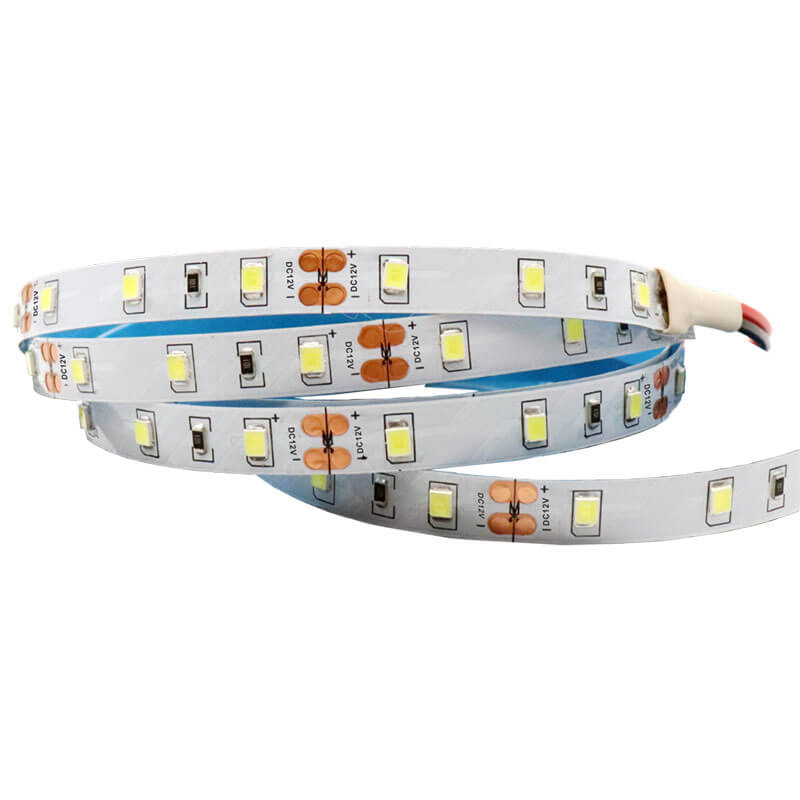 Environmental Lights offers Dim-to-Warm Strip Light in 2 varieties of 5-meter reels. One option of the strip light provides a CCT range of 2,700K to 1,800K, and the other with a slightly higher upper threshold from 3,000K to 1,800K. Both varieties connect directly to a dimming power supply (must be PWM – Pulse Width Modulation) and shift the LEDs to a lower CCT as the overall brightness decreases.
Sales engineers are available to answer questions and assist with specifying the ideal combination of lights and power for projects.
Environmental Lights offers Dim-to-Warm Strip Light in 2 varieties of 5-meter reels. One option of the strip light provides a CCT range of 2,700K to 1,800K, and the other with a slightly higher upper threshold from 3,000K to 1,800K. Both varieties connect directly to a dimming power supply (must be PWM – Pulse Width Modulation) and shift the LEDs to a lower CCT as the overall brightness decreases.
Sales engineers are available to answer questions and assist with specifying the ideal combination of lights and power for projects.
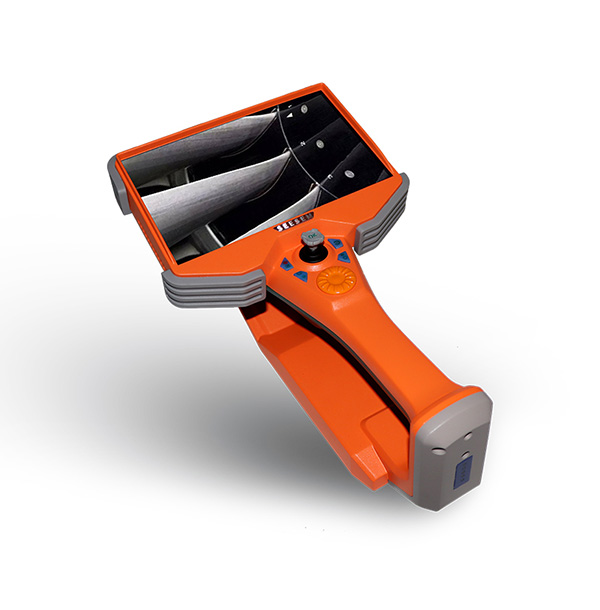 Diameters are available in 3.8 mm and 6 mm in lengths of 1.5 m (59"), 3 m (118") and 5 m (197") for each. The probe length is 15 mm, and the bending angle is >/= 190° for all models. The new TVSH-35 HD videoscopes feature a 3.5" monitor with an image resolution of 1,280 x 720 pixels. Field of view is 120° and depth of view is 10 mm to 80 mm. A durable protective case has precision-cut inserts for safe carrying and storage.
 While putting small solar panels on remotes certainly isn’t a new concept and already exists in production remotes, like Samsung’s SolarCell TV remote, those tend to place the solar panel on the back of the remote to maximize the size of the photovoltaic cell. That requires you to remember to flip the remote over when you’re done using it, which is far from a practical solution. The cell placed on the front of the prototype Fire TV remote seems to indicate that the technology may have now advanced to the point where the concept works without sacrificing practicality or comfort. That said, the latest Fire TV remotes now have even less open surface area for the placement of even a small photovoltaic cell, due to the relatively recent addition of app shortcut buttons along the bottom. If the next Fire TV remote does include a solar panel on the front, it may need to grow a bit in length.
The panel uses light sources to convert that energy into electricity that can charge the battery within the remote. The technology being used here is provided by Exeger, but isn’t really a new idea in the TV industry.
In recent years, we’ve seen self-charging remotes from brands such as Samsung – and Amazon is expected to be working on integrating the technology into its next Fire TV remote – but we’ve not yet seen it on Google TV devices.
Of course, there’s no clear timeline for when this self-charging remote might actually launch with a Google TV product. The G10 remote design from TW has launched quite widely on streaming boxes and dongles launched with Android TV and Google TV over the past year, but the G20 design is rarely seen.
But as competition in the streaming space continues to heat up, some brands might be interested in using this self-charging remote, we just don’t expect it to become the standard option for all devices anytime soon.
Remote controls were originally invented back in the 1890s. Nikola Tesla, best known for his work with electricity, invented and patented a remote control for a boat in 1898. Then, in 1903, a man named Leonardo Torres Quevado presented the “Telekino” at the Paris Academy of Science. The “Telekino” was basically a robot that would act out commands that were transmitted by electromagnetic waves, the same waves used in remote controls. That made the “Telekino” the world’s first device for radio control, breaking down countless barriers when it came to research. Three years later, Quevado made another remote control demonstration when he guided a boat in from shore. He would have been able to do more research and even apply remote control technology to projectile weapons like torpedoes, but he never received the funding.
In 1950, the first ever TV control was invented. This remote control, called the “lazy Bones,” was actually connected to the television set up by a wire attachment. As it was rather cumbersome, the Zenith Company came up with a different approach: a wireless remote that used beams of light and photoelectric cells to operate. However, the remote, called the “Flashmatic”, was largely a failure because the cells couldn’t properly distinguish natural light from the control’s light.
Then, in 1956, Dr. Robert Alder developed a remote called the “Zenith Space Command.” It used ultrasound waves to change the channels and volume on television sets. Users simply had to push a button and it clicked, which is why they are sometimes referred to as “clickers.” Interestingly, this remote released waves that some people could hear and there were other problems associated with it as well.
The Ceefax teletext service, created in the 1970s, spawned a new generation of remotes: these remotes could actually type in numbers as opposed to just going up and down. Eventually, remotes needed to evolve to the point where they could select things like contrast and brightness from a menu, so from 1977 to 1978, companies began to expand their horizons.
Today, wireless technology has progressed to a point where remote controls are more advanced than car stereos. It’s hard to think that it all started with a small remote control boat.
Like a solar battery charger for your phone, this remote has a photovoltaic panel that lets it use light to recharge the battery. This panel is provided by Swedish customizable solar cell manufacturer Exeger.Although this isn’t the first self-charging remote we’ve ever seen — Samsung has one of its own — it is the first one ever made for Google TV.
As you may have noticed while reading the tweet, there’s no mention of a launch date. The company has not given any information on when to expect the device. All that’s known right now is it will come out at some point in the future. When it does, it’ll be nice to have a remote you don’t need to worry about in terms of battery life.
While putting small solar panels on remotes certainly isn’t a new concept and already exists in production remotes, like Samsung’s SolarCell TV remote, those tend to place the solar panel on the back of the remote to maximize the size of the photovoltaic cell. That requires you to remember to flip the remote over when you’re done using it, which is far from a practical solution. The cell placed on the front of the prototype Fire TV remote seems to indicate that the technology may have now advanced to the point where the concept works without sacrificing practicality or comfort. That said, the latest Fire TV remotes now have even less open surface area for the placement of even a small photovoltaic cell, due to the relatively recent addition of app shortcut buttons along the bottom. If the next Fire TV remote does include a solar panel on the front, it may need to grow a bit in length.
The panel uses light sources to convert that energy into electricity that can charge the battery within the remote. The technology being used here is provided by Exeger, but isn’t really a new idea in the TV industry.
In recent years, we’ve seen self-charging remotes from brands such as Samsung – and Amazon is expected to be working on integrating the technology into its next Fire TV remote – but we’ve not yet seen it on Google TV devices.
Of course, there’s no clear timeline for when this self-charging remote might actually launch with a Google TV product. The G10 remote design from TW has launched quite widely on streaming boxes and dongles launched with Android TV and Google TV over the past year, but the G20 design is rarely seen.
But as competition in the streaming space continues to heat up, some brands might be interested in using this self-charging remote, we just don’t expect it to become the standard option for all devices anytime soon.
Remote controls were originally invented back in the 1890s. Nikola Tesla, best known for his work with electricity, invented and patented a remote control for a boat in 1898. Then, in 1903, a man named Leonardo Torres Quevado presented the “Telekino” at the Paris Academy of Science. The “Telekino” was basically a robot that would act out commands that were transmitted by electromagnetic waves, the same waves used in remote controls. That made the “Telekino” the world’s first device for radio control, breaking down countless barriers when it came to research. Three years later, Quevado made another remote control demonstration when he guided a boat in from shore. He would have been able to do more research and even apply remote control technology to projectile weapons like torpedoes, but he never received the funding.
In 1950, the first ever TV control was invented. This remote control, called the “lazy Bones,” was actually connected to the television set up by a wire attachment. As it was rather cumbersome, the Zenith Company came up with a different approach: a wireless remote that used beams of light and photoelectric cells to operate. However, the remote, called the “Flashmatic”, was largely a failure because the cells couldn’t properly distinguish natural light from the control’s light.
Then, in 1956, Dr. Robert Alder developed a remote called the “Zenith Space Command.” It used ultrasound waves to change the channels and volume on television sets. Users simply had to push a button and it clicked, which is why they are sometimes referred to as “clickers.” Interestingly, this remote released waves that some people could hear and there were other problems associated with it as well.
The Ceefax teletext service, created in the 1970s, spawned a new generation of remotes: these remotes could actually type in numbers as opposed to just going up and down. Eventually, remotes needed to evolve to the point where they could select things like contrast and brightness from a menu, so from 1977 to 1978, companies began to expand their horizons.
Today, wireless technology has progressed to a point where remote controls are more advanced than car stereos. It’s hard to think that it all started with a small remote control boat.
Like a solar battery charger for your phone, this remote has a photovoltaic panel that lets it use light to recharge the battery. This panel is provided by Swedish customizable solar cell manufacturer Exeger.Although this isn’t the first self-charging remote we’ve ever seen — Samsung has one of its own — it is the first one ever made for Google TV.
As you may have noticed while reading the tweet, there’s no mention of a launch date. The company has not given any information on when to expect the device. All that’s known right now is it will come out at some point in the future. When it does, it’ll be nice to have a remote you don’t need to worry about in terms of battery life. 
There is the disposable pod device called the Tugboat Vape for mouth-to-lung vapers. The Tugboat Vape offers a simple vape for mobility and convenience of usage with pre-filled saltnic e-liquid. The battery in the Tugboat pod is fully charged and won’t discharge until the e-liquid is completely vaporized. You may select from a variety of tastes!
The machinery doesn’t need to be maintained and is fully autonomous. We deal directly with the manufacturer; thus, the only products on the record are genuine, certified goods. The only original Tugboat products kept in stock are those that are the most in demand. These one-time-use devices are small, lightweight, and offer a cozy, stylish appearance. The models include robust, leak-proof, stress-resistant plastic housings that won’t slip from your hands. A strong battery, a heating coil, and a liquid cartridge make up the usual Tugboat Disposable vape. These devices are initiated by blowing and running automatically. Air passes through the battery as you breathe in, activating the sensors. The vapor is released when the liquid heats.
EASIER AND SAFER:
It’s easier and safer to smoke a disposable vaporizer from Tugboat than a regular cigarette. The device lets you quickly obtain the necessary nicotine dosage without jeopardizing your health. On your own, you can give up smoking.
Simple vigilance is all that is needed to avoid falls and mechanical damage. The business employs disposable technology that doesn’t require charging or liquid filling to function. They come with a refilled, long-lasting cartridge and a fully charged battery TUGBOAT DISPOSABLE. Status monitoring is possible thanks to an LED indication on the enclosure.
EASY HANDLING:
Smoking is permitted in enclosed places as long as no combustion products are produced while the device is in operation and the vapor is not too thick to trigger the fire system’s detectors. Remember that using the device may produce varying levels of vapor, which not everyone in the area may find pleasant. Even though there are other people in the room with you and the equipment won’t smell bad, it is still a good idea to question them about it.
BENEFITS OF A TUGBOAT DISPOSABLE VAPE:
The company uses salty nicotine-based liquids for its goods. This liquid consists entirely of liquid elements. This indicates that it doesn’t produce the same combustion byproducts as regular tobacco when heated. As a consequence, the components of the vape refill are healthier and less toxic.
Each series of Tugboat Disposable vapes dubai features a simple and practical design in addition to various flavors. Some models provide classic and one-of-a-kind flavor combinations with fruity, berry, and refreshing undertones for individuals who want the most robust tobacco flavors. Don’t be scared to try new things and peruse the Tugboat selection to locate the ideal device!
Last but not least, disposable vapes are the best, especially for individuals new to vaping or wanting an immediate hit while on the road. However, if you want to quit smoking and discover that vaping helps you, we advise purchasing the TUGBOAT DISPOSABLE device.