Submersible Pumps: Working Principle, Types, Applications, and Benefits from SEO BY AMANDA's blog
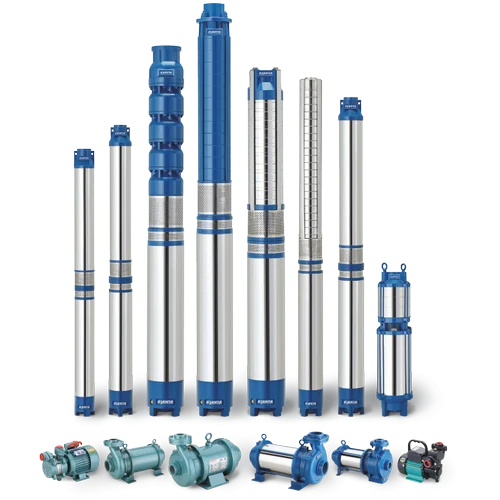
A submersible pump is a highly efficient mechanical device designed to operate while fully submerged in a fluid. Unlike surface pumps that pull liquid upward, submersible pumps push fluid to the surface, making them more energy-efficient and reliable for many water-handling applications.
They are widely used in agriculture, domestic water supply, sewage treatment, mining, and industrial processes.
What is a Submersible Pump?A submersible pump is a sealed unit that combines a motor and pump in a single housing. The motor is hermetically sealed to prevent water from entering, allowing the entire system to be submerged in water or other fluids.
The key principle behind its operation is simple:
it pushes fluid instead of pulling it, which reduces energy loss and prevents issues like cavitation.
The working process can be summarized in a few steps:
- The pump is placed fully underwater (in a well, tank, borehole, or sump).
- The electric motor powers the impeller.
- The rotating impeller creates pressure that pushes water into the discharge pipe.
- Water is forced upward to the surface through the piping system.
Since the pump is already surrounded by fluid, it does not need to create suction, which improves efficiency and reduces wear.
Types of Submersible Pumps 1. Borehole Submersible PumpsThese are used in deep wells for groundwater extraction. They are long and narrow to fit inside boreholes.
2. Sewage Submersible PumpsDesigned to handle wastewater and solids. These are commonly used in municipal sewage systems and industrial drainage.
3. Well Submersible PumpsUsed in shallow to medium-depth wells for domestic water supply.
4. Drainage Submersible PumpsUsed to remove unwanted water from basements, construction sites, and flooded areas.
5. Slurry Submersible PumpsBuilt for heavy-duty industrial use, especially in mining and dredging operations.
Key ComponentsA typical submersible pump includes:
- Motor housing (sealed and waterproof)
- Impeller (creates pressure and flow)
- Diffuser (directs water flow efficiently)
- Shaft (connects motor to impeller)
- Seal system (prevents water leakage into motor)
- Cable assembly (waterproof electrical connection)
Submersible pumps are used across multiple industries:
- Agriculture: irrigation and groundwater extraction
- Domestic use: household water supply from wells and tanks
- Sewage systems: wastewater and drainage management
- Construction: dewatering flooded excavation sites
- Mining: slurry and groundwater removal
- Industrial plants: fluid transfer and cooling systems
Because they push water rather than pull it, energy losses are minimized Submersible pumps.
2. No Cavitation IssuesSubmersion prevents air pockets, reducing cavitation risks.
3. Quiet OperationSince the pump is underwater, noise levels are very low.
4. Self-PrimingNo need for manual priming, making operation easier.
5. Space SavingInstalled directly in the fluid source, eliminating the need for external pumping stations.
LimitationsDespite their advantages, submersible pumps have some drawbacks:
- Difficult to access for maintenance
- Higher initial installation cost
- Requires proper waterproofing and sealing
- Repair often requires lifting the entire unit
Several global companies are known for producing high-quality submersible pumps:
- Grundfos – A Danish manufacturer known for energy-efficient pumping solutions used worldwide.
- KSB – A German engineering company producing durable pumps for industrial and municipal applications.
- Xylem – A global water technology company specializing in water transport and treatment systems.
To ensure long life and optimal performance:
- Regularly inspect electrical cables and insulation
- Avoid running the pump dry
- Clean filters and intake screens
- Monitor vibration and noise levels
- Schedule periodic professional servicing
Submersible pumps are essential devices in modern water management systems. Their ability to operate underwater, combined with high efficiency and reliability, makes them ideal for a wide range of applications from household water supply to heavy industrial use.
With proper selection, installation, and maintenance, a submersible pump can provide long-lasting and cost-effective performance in almost any fluid-handling environment.
Post
| By | SEO BY AMANDA |
| Added | Jun 6 |
Rate
Archives
- All
- October 2026
- September 2026
- August 2026
- July 2026
- June 2026
- May 2026
- April 2026
- March 2026
- January 2026
- December 2025
- November 2025
- October 2025
- September 2025
- August 2025
- July 2025
- June 2025
- May 2025
- April 2025
- March 2025
- February 2025
- January 2025
- December 2024
- November 2024
- October 2024
- September 2024
- August 2024
- July 2024
- June 2024
- May 2024
- April 2024
- March 2024
- February 2024
- January 2024
- December 2023
- November 2023
- September 2023
- August 2023
- July 2023
- June 2023
- May 2023
- April 2023
- March 2023
- February 2023
- January 2023
- December 2022
- November 2022
- October 2022
- September 2022
- August 2022
- July 2022
- June 2022
- April 2022
- March 2022
The Wall