Water Treatment Plant for the Aeronautical sector from flowerlover's blog
On this occasion, a leading company in the aircraft parts treatment sector has contacted J.HUESA to adjust the water quality of the rinsing baths for parts in military aircraft. J.HUESA after studying the characteristics of raw water, designed, manufactured, installed and commissioned plant water treatment is to subject the desalting until a water quality whose conductivity is less than 10 microsiems .
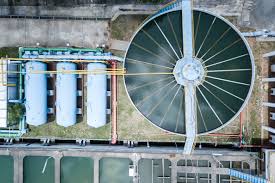
The facility, which has a capacity of 30 m 3 / h, is made up of a reverse osmosis plant with a previous filtration treatment. As well as accumulation of treated water in the first step, and demineralization in recirculation over baths. Whose operation is explained below:
- The mains water is filtered through a low speed bilayer filter and automatic washing. In which the solids in suspension are retained. Before the water enters the reverse osmosis plant, a sequestrant is dosed to increase the reducing value of the water and eliminate the hypochlorite. With the triple objective of guaranteeing the protection and durability of the membranes, producing a bacteriostatic effect and adjusting the pH. An antifouling-dispersant product is then metered in. To prevent calcium and magnesium salts, among others. These produce incrustations in the membranes and therefore, losses of flow of treated water. best household water purifier price in bangladesh
- The pretreated water goes to the reverse osmosis module. Where it is first filtered through a 5 micron pore size cartridge system. This will retain possible leaks of particles and suspended solids. The purpose of the safety filter is to retain the particles that may leak from the filters or that are introduced with the chemical product. Thus protecting pressure pumps and reverse osmosis membranes.
- Afterwards, the stored water serves as a lung to supply the losses generated in the rinsing baths. As well as for the regeneration of resins and their activation. This water will pass through a filter bed. In order to retain the solids that are dragged into the bath system. All the water will pass through ion exchange resin beds to remove the salts. And thus leave the water conditioned to a quality that does not exceed 10 microsiems.
It includes a control panel for the complete management of the plant with communication. This is done using profibus dp and modbus TCP-IP from Siemens.
The main advantages to consider in the installation in question are the following:
- The system is fully automatic, it can work up to 24 hours a day, with minimal supervision. It does not require personnel with special qualifications.
- The reverse osmosis system supposes a bacteriological barrier in the produced water, which eliminates bacteriological problems in the installation. The sanitization of the membranes is contemplated in the design of the equipment. Assuming a routine operation that can be repeated over time.
The Wall